Modality
Myofascial Release Massage in Seattle
Myofascial release treats the fascia, the continuous web of connective tissue that wraps every muscle, nerve and organ, so a restriction in one place stops pulling on the rest of the body.
It is the foundation of every FlowState session and the reason clients with long-standing pain often find relief here after other massage has stopped helping.
About fascia
The network most massage overlooks
Fascia is the connective-tissue network that wraps and links every muscle, bone, nerve, blood vessel and organ, from the top of your head to the tips of your toes. Only recently has it begun to receive widespread scientific study, and its role in pain and movement is still being mapped.
Healthy fascia glides and stretches. After injury, surgery, inflammation or long-term stress it can tighten and bind, pulling on structures far from the original problem. Because it is richly supplied with nerves, it can be a source of pain in its own right, and restrictions do not show up on X-ray, MRI or CT scans.

Who it helps
- Chronic neck, shoulder and upper back pain from desk work and screen posture
- Low back and hip pain that returns no matter how much you stretch
- Stiffness and restricted range of motion after an injury or surgery
- Pain that moves around or shows up far from where the problem started
- Tension headaches that begin at the base of the skull
- Anyone told that their imaging is clear but the pain is still there
What a session feels like
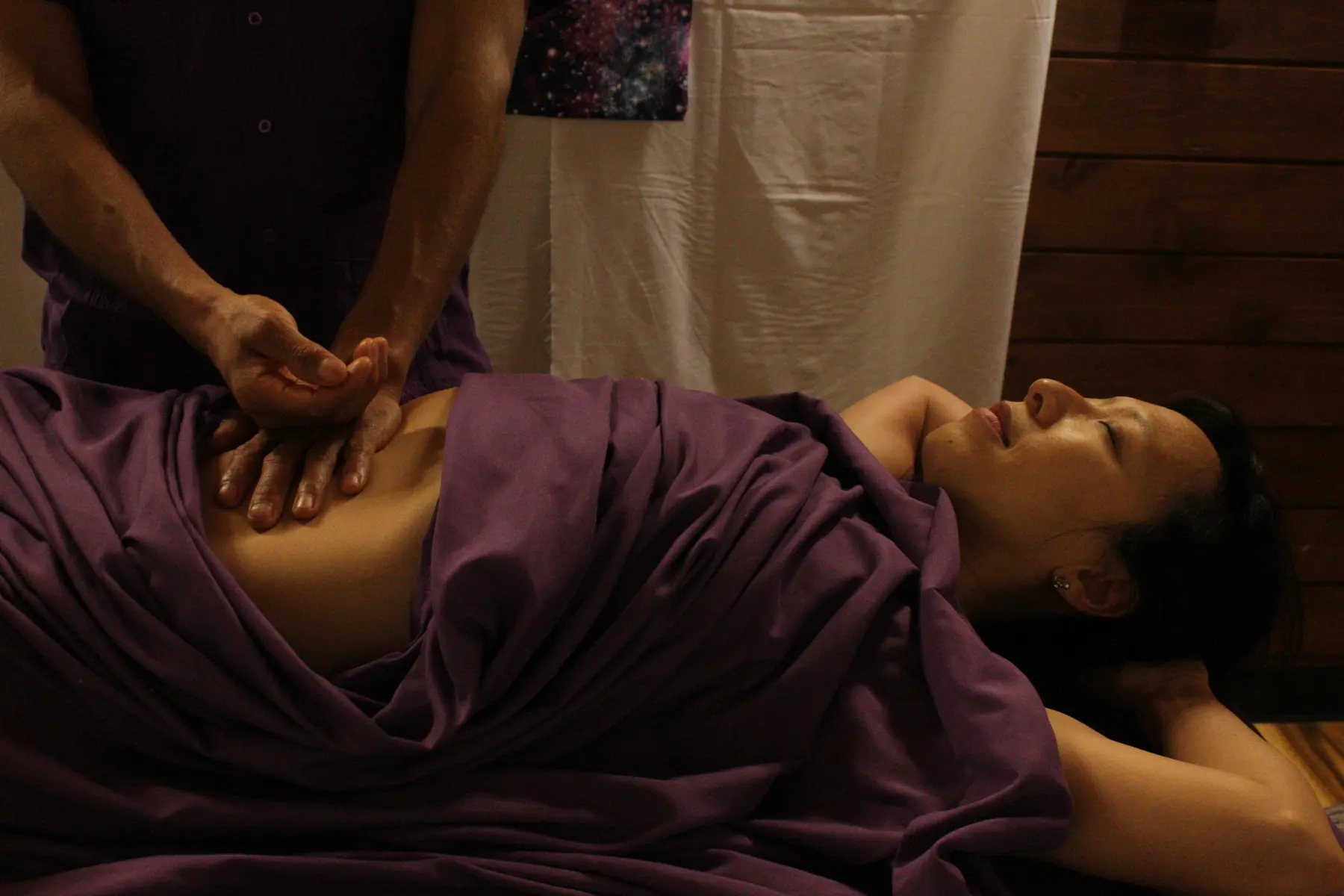
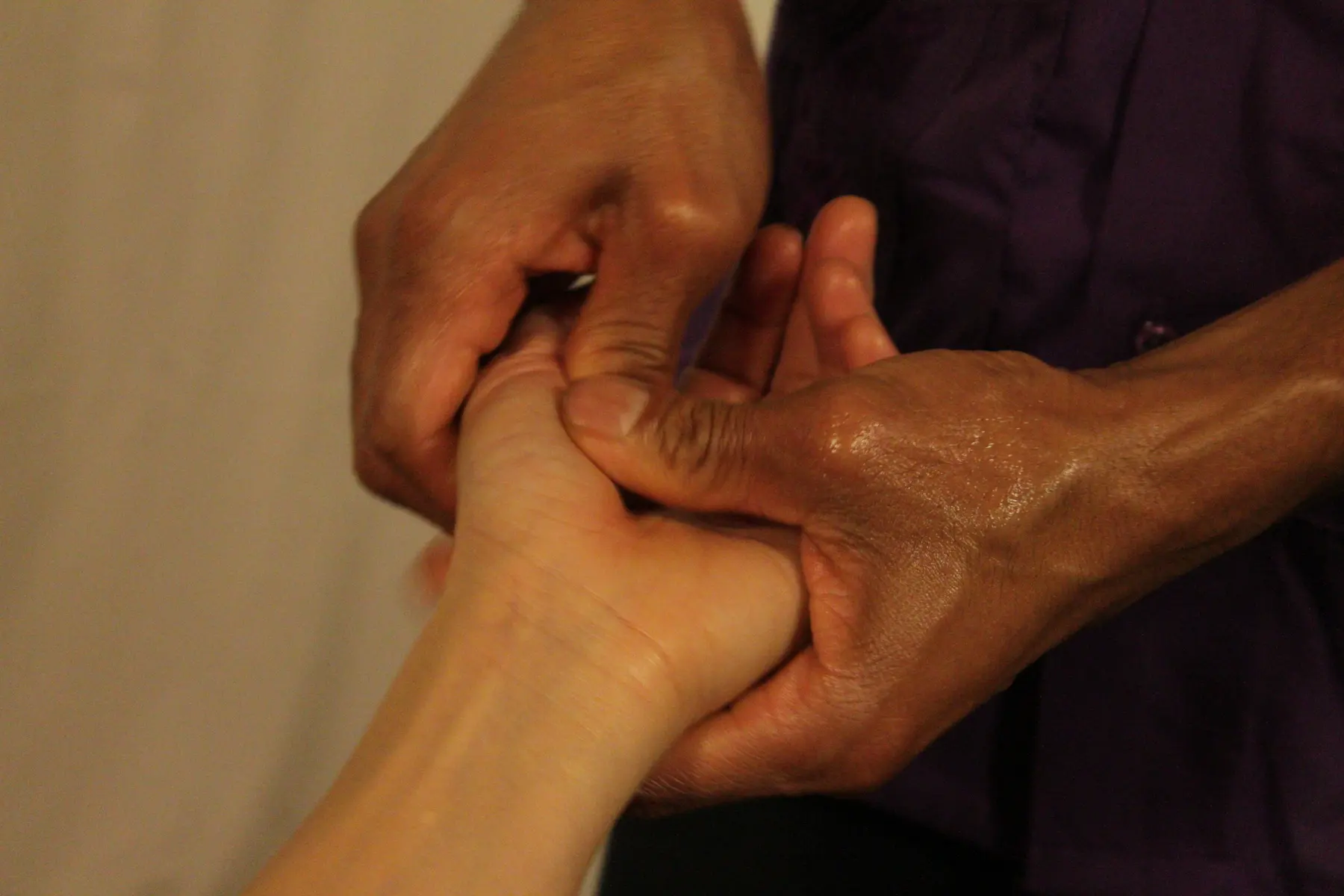
Sessions begin without oil or lotion. Your therapist needs a direct grip on the skin to engage the fascia, so pressure is applied slowly and held, often for one to five minutes in one place, until the tissue softens under the hands.
Pressure builds gradually. Because the body is never forced, your nervous system has time to register that it is safe and stop guarding, which is when the release happens. Many clients describe a slow melting or spreading warmth rather than the push-and-glide of a typical massage.
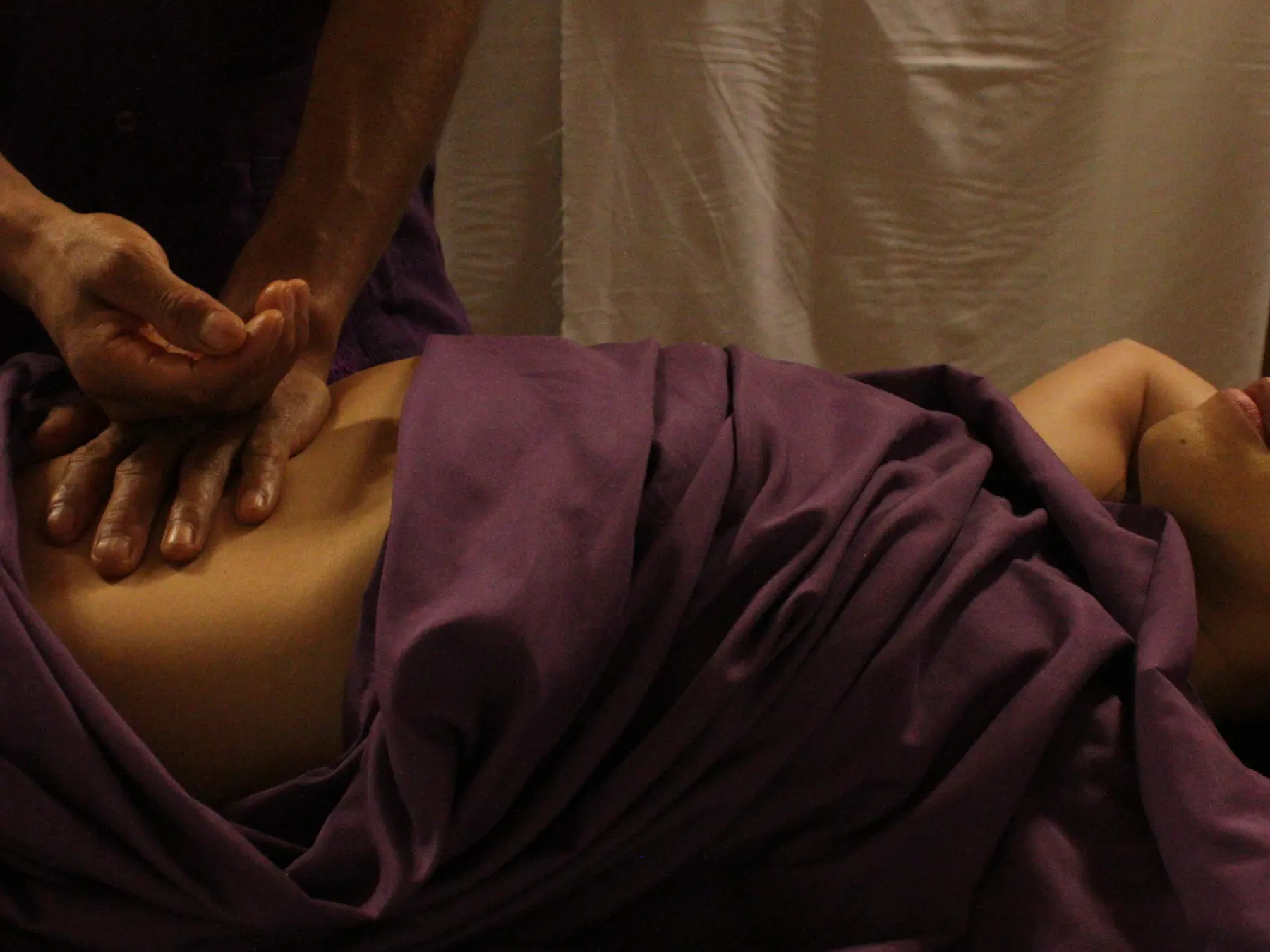
You may be treated in areas that seem unrelated to your symptom. A tight abdomen or diaphragm, for example, is a common driver of back pain. Your therapist will explain what they are working on and why.
How it’s different
Swedish massage glides over the surface to relax. Deep tissue applies firm, direct force into muscle. Trigger point therapy targets isolated knots. Myofascial release treats restriction as part of a body-wide network and unwinds it by holding pressure and waiting for the tissue to respond, not by overpowering it.
Fascial restrictions do not appear on X-ray, MRI or CT scans, and many therapists are not trained to assess them. That is why restrictions often remain after a round of physical therapy, and why clients who have been told to "live with it" frequently respond well to this work.
How many sessions
Many clients feel a clear difference after one session. Long-standing pain usually needs a short series to unwind years of compensation: every two to four weeks at first, then monthly for maintenance.
We recommend 90 minutes for a first visit. It leaves time to treat the primary complaint and the areas that feed it.
Myofascial Release questions
Does myofascial release hurt?
It should not. Pressure is slow and sustained and stays within a range where you can breathe and stay relaxed. Some areas may feel intense as they release, and you can ask for lighter pressure at any time.
Why is no oil used?
Oil makes the hands slide. Myofascial work needs a firm, direct contact with the skin so the therapist can engage and stretch the fascia instead of gliding over it.
What should I wear?
Most clients undress to their comfort level and are draped throughout. You can also keep on shorts or leggings and a soft T-shirt; meaningful fascial work is still possible.
Can I combine it with deep tissue or stretching?
Yes, and most sessions do. Myofascial release softens the tissue first so deep tissue, joint mobilization and assisted stretching work with less resistance.