Modality
Contract Relax (PNF) Stretching
Contract relax, a form of PNF stretching, uses brief, gentle muscle contractions against your therapist’s resistance to reset the reflex that stops a muscle from lengthening.
Paired with myofascial release, it delivers fast, safe gains in flexibility without forcing your body past its limits.
Who it helps
- Tight hamstrings, hip flexors and calves that do not respond to regular stretching
- Athletes and dancers looking for more usable range
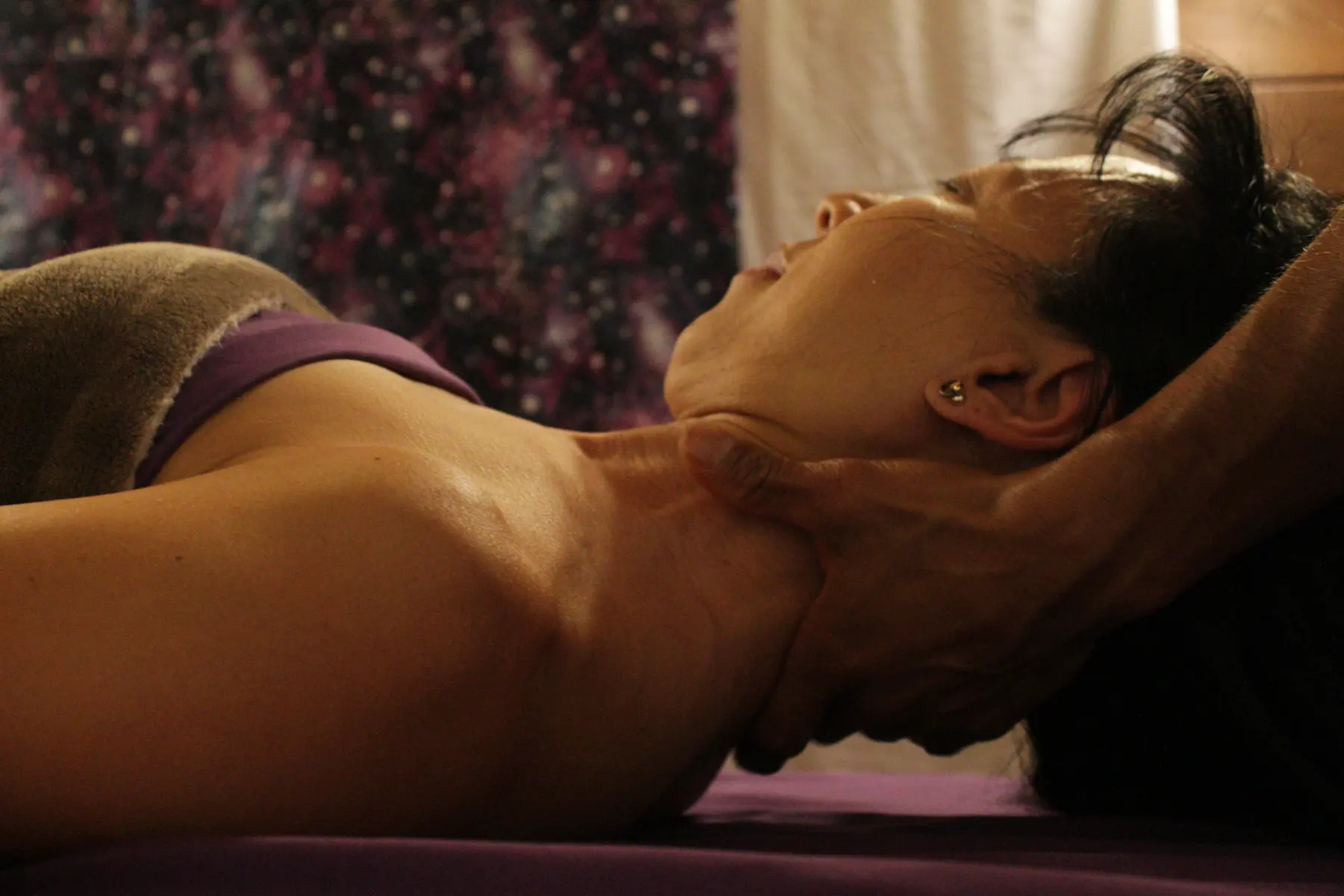
- Neck and shoulder tightness that limits turning or reaching
- Clients who guard or tense up during passive stretches
- Anyone whose flexibility gains disappear within a day
- Desk workers whose hips and chest have shortened from sitting
What a session feels like
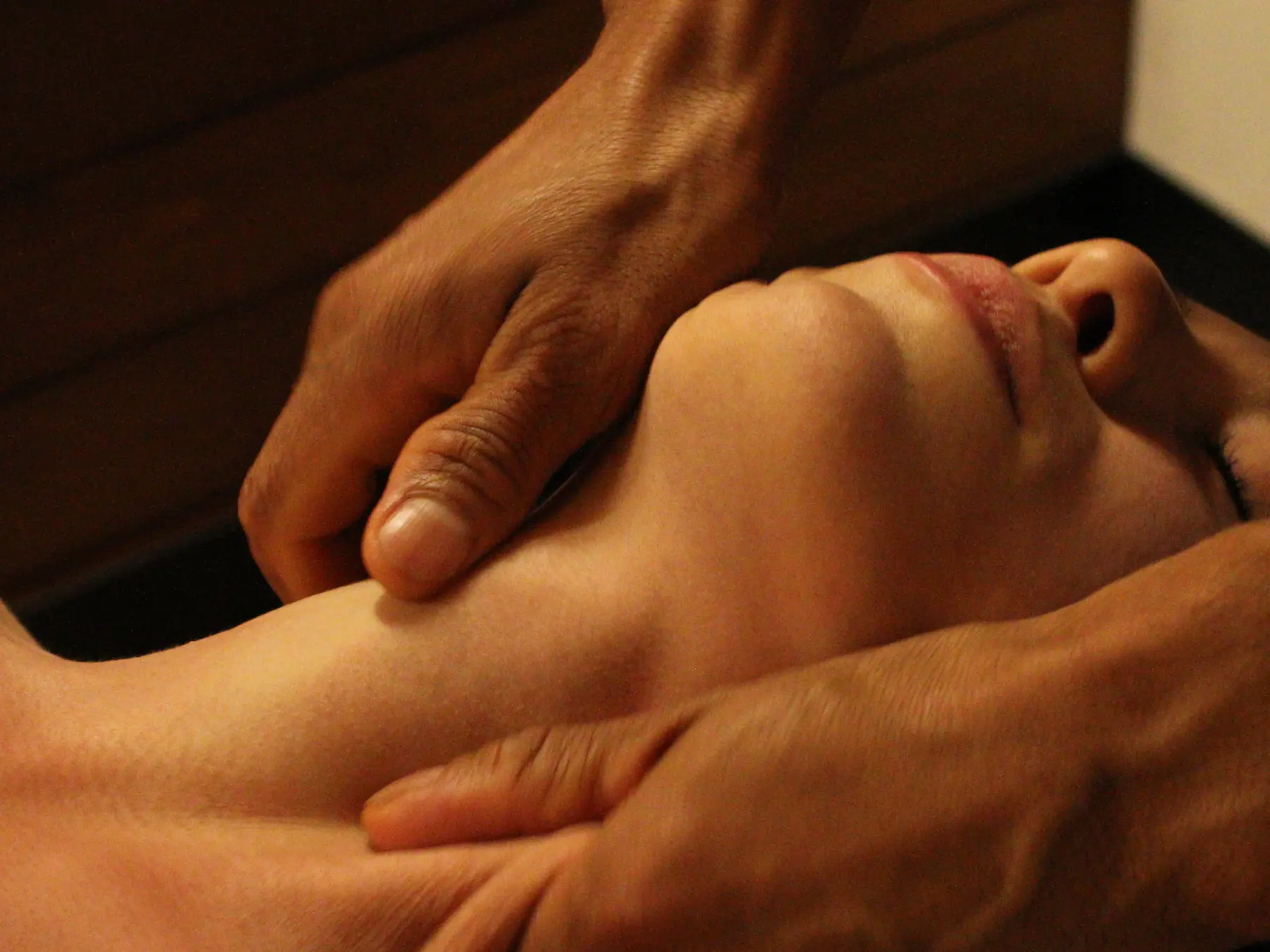
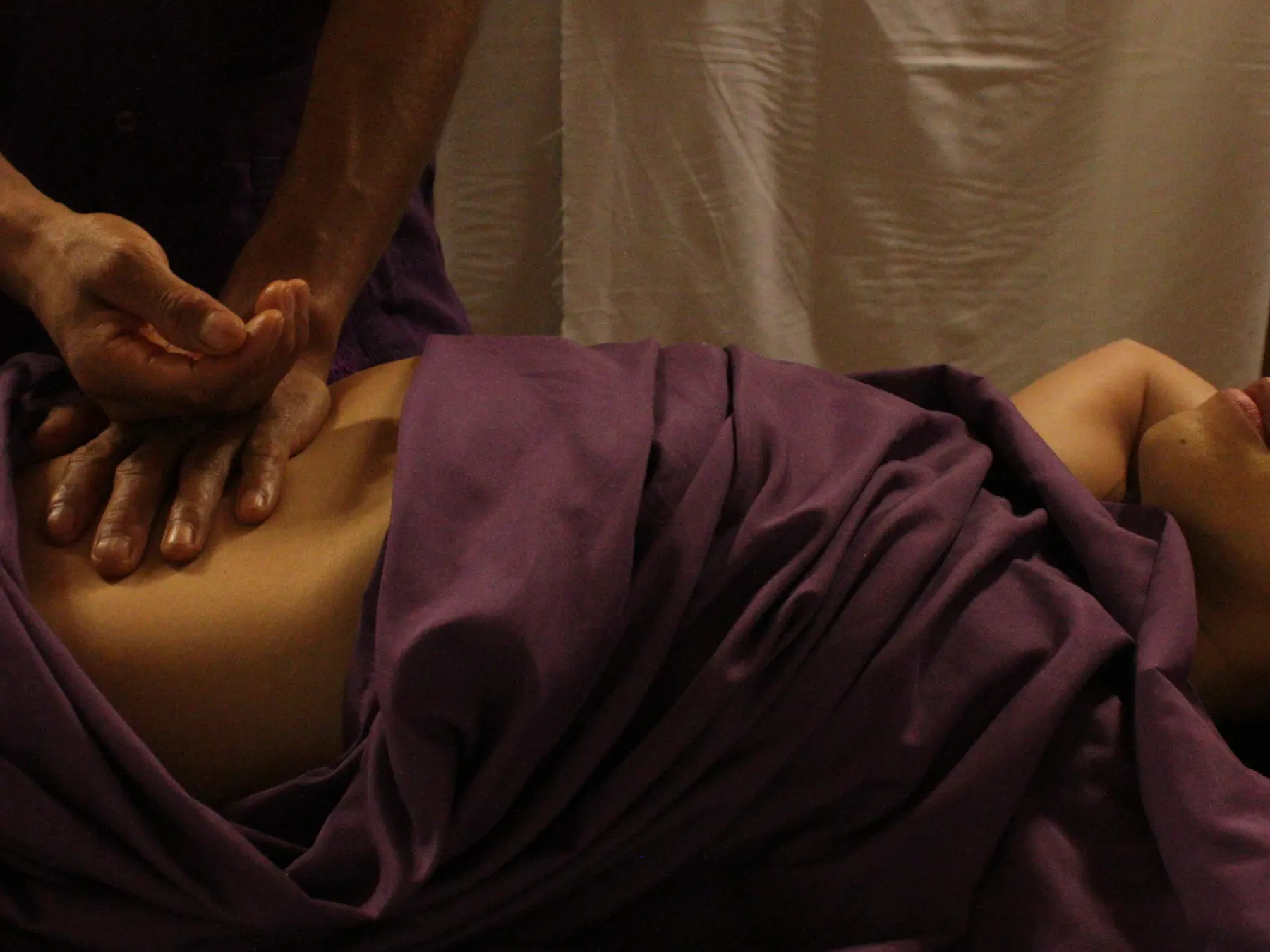
Your therapist takes a muscle to the edge of its comfortable stretch, then asks you to press gently against their hand for a few seconds. You relax, breathe out, and the therapist guides the limb a little further. The sequence repeats two or three times.
The effort is light, about a quarter of your strength. The deeper range comes from your nervous system easing its protective brake, not from pushing harder.
Your therapist talks you through each cycle, so you always know when to press, when to breathe and when to let go. It is active and engaging, and most clients find it satisfying to feel a stubborn muscle give way within a few repetitions.
How it’s different
Passive stretching relies on time and relaxation. Contract relax works through the nervous system: the brief contraction triggers a natural reflex, autogenic inhibition, that lets the muscle lengthen more than a passive stretch alone.
Myofascial release does the structural half. If the fascial sleeve around a muscle is restricted, the muscle cannot fully lengthen even when the nervous system allows it. Releasing the fascia first, then using contract relax, treats both the tissue and the signal.
Compared with assisted stretch therapy, contract relax asks a little more of you: a few seconds of gentle effort per cycle. That small effort is what makes it efficient for muscles that resist passive stretching.
How many sessions
Gains are often immediate. Repeating the work over several sessions teaches your body to keep its new range, especially when paired with the short home routine your therapist suggests.
Contract relax is usually blended into a regular session rather than booked alone. A 60-minute session can focus on the hips and legs or the neck and shoulders; 90 minutes allows work on the whole body plus myofascial release to prepare each area.
Contract Relax (PNF) questions
Is PNF stretching safe?
Yes, when guided. Contractions are gentle and brief, and your therapist controls the range so you are never forced.
Do I need to be flexible already?
No. Contract relax is most useful for people who are tight.
Can I book contract relax on its own?
It is blended into any session where it helps. Mention your goals when you arrive and your therapist will build it in.
Will I be sore afterward?
Usually not. The contractions are light. Some people feel a mild, pleasant fatigue in the worked muscles, similar to after a gentle yoga class.